Why R&D Capability Matters in MedTech Manufacturing
In the MedTech industry, a manufacturing partnership often begins long before a product reaches mass production.
Product design, material selection, mould development and the moulding process are closely connected. Decisions made during the R&D stage can influence product performance, tooling investment, validation activities, production stability and the eventual cost of each good part.
For this reason, R&D capability is becoming increasingly important for both MedTech companies and contract manufacturers.
A right-sized micro-injection moulding platform allows development teams to start small, learn from actual moulding trials and optimise the product and process before committing to larger production investments.
Advantages for MedTech Companies with In-House R&D
An in-house micro-injection moulding capability can give a MedTech company greater control during early product development.
It can help the R&D team to:
-
Develop new products confidentially and protect sensitive product knowledge.
-
Conduct material studies and process trials internally.
-
Evaluate critical features and manufacturing feasibility earlier.
-
Understand how product geometry, material behaviour and processing conditions interact.
-
Mature or freeze the design before transferring it to a contract manufacturer.
-
Reduce repeated Engineering Change Notices, mould modifications and sampling rounds.
-
Establish clearer technical requirements for supplier selection and production transfer.
-
Prepare the product and process for pilot production and scale-up.
Resolving technical issues during R&D is generally more manageable than discovering them after production tooling, validation activities or supply-chain commitments have begun.
By improving design maturity before supplier transfer, MedTech companies may reduce development time, avoid unnecessary rework and communicate more effectively with their manufacturing partners.
An Opportunity for MedTech Contract Manufacturers
Not every MedTech company has its own moulding laboratory, tooling team or process-development capability.
This creates an opportunity for contract manufacturers that can provide more than production capacity.
A contract manufacturer with R&D, tooling and process-development capabilities can support the customer through:
DFM review → Material trials → Mould development → Prototyping → Process optimisation → Pilot production → Scaled production
Early involvement allows the contract manufacturer to understand the product and its critical requirements before the design is fully fixed.
This can help the manufacturing team to:
-
Identify potential moulding, tooling and material challenges earlier.
-
Recommend practical design-for-manufacturing improvements.
-
Develop specialised knowledge of the product and process.
-
Improve communication between the customer's R&D team and the manufacturing team.
-
Reduce development and production-transfer risks.
-
Build technical trust with the customer.
-
Strengthen its opportunity to secure the future production contract.
For contract manufacturers, R&D capability can therefore become a competitive advantage. The relationship develops around engineering contribution and problem-solving—not only price and production capacity.
Why a Right-Sized Machine Matters During R&D
Early product development normally involves limited quantities. For many applications, a single-cavity mould may be sufficient for initial trials, material evaluation and process development.
Using a large production machine for these activities may introduce unnecessary costs, especially when the parts are very small.
The total cost of an R&D moulding programme can include:
-
Mould steel and machining.
-
Material used for trials and process setting.
-
Sprues, runners and rejected parts.
-
Purging and material changeovers.
-
Electricity and auxiliary equipment.
-
Laboratory or production floor space.
-
Machine time taken away from commercial production.
Selecting a machine that is appropriately sized for the component and development volume can help control these costs.
How Babyplast Can Reduce the Cost of R&D
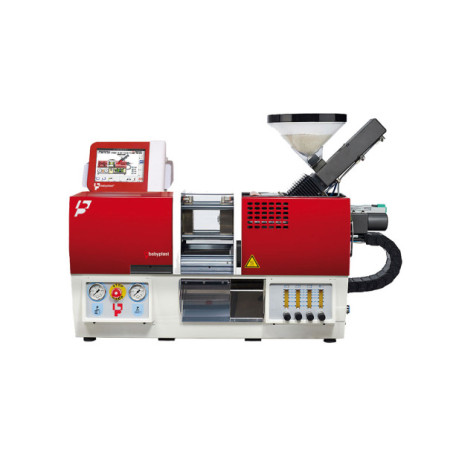
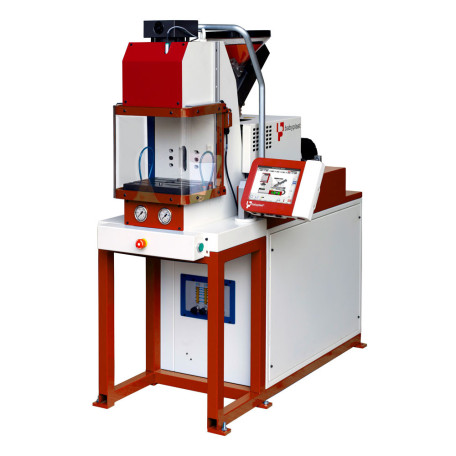
Babyplast micro injection moulding machines are designed for small and micro-precision components. For suitable applications, they can provide several cost and resource advantages during R&D.
Smaller Moulds and Lower Tooling Investment
Babyplast uses a compact tooling concept. Depending on the application, it may be possible to use smaller moulds or mould inserts instead of a conventional full-size mould base.
Reducing the mould size may reduce the amount of mould steel, machining, assembly, handling and storage required. A smaller tool may also be easier to modify during development.
Actual tooling savings will depend on the component geometry, material, cavity arrangement, cooling or heating requirements and production objectives.
Less Material Waste
Small selectable injection volumes and a low material residence volume are valuable when testing high-cost materials.
This is particularly relevant for medical-grade polymers, high-performance engineering thermoplastics, specialised compounds, MIM or CIM feedstocks and limited quantities of development material.
Matching the injection volume and runner system more closely to the component can reduce unnecessary resin consumption during trials.
Compact R&D Footprint
Laboratory and cleanroom space is valuable.
The compact footprint of Babyplast allows companies to establish an in-house injection moulding capability without allocating the space normally required for a larger conventional production machine.
This can be helpful for R&D laboratories, material-development centres, universities, research institutes and product-innovation facilities.
Lower Power Requirements
Babyplast machines have approximately 3 kW of installed power, providing a right-sized energy requirement for the development and production of small components.
The total energy required for any moulding process will also depend on cycle time, material drying, mould heating or cooling, auxiliary equipment, automation and other production conditions.
More Flexible Experimentation
A dedicated development platform allows engineers to perform material changes, design iterations and process trials without occupying a larger production machine or interrupting commercial manufacturing.
This flexibility can help teams learn, optimise and document the process before scale-up.
From R&D to Scaled Production
Babyplast is not limited to laboratory trials or prototyping.
For suitable small and micro-precision components, the same platform can support the complete manufacturing journey:
R&D → Prototyping → Process optimisation → Pilot production → Scaled production
Continuing with the same machine platform can reduce the challenges associated with transferring a developed process to completely different equipment.
It can also help preserve established processing conditions, process knowledge, precision and repeatability as production requirements increase.
When higher output is required, production capacity can be expanded through an appropriate combination of:
-
Suitable cavity strategies.
-
Automation and robotic handling.
-
Multiple Babyplast machines or production cells.
-
Insert-loading and part-removal systems.
-
Process monitoring and quality-control requirements.
The appropriate scale-up approach will depend on component design, material, cycle time, annual volume and quality requirements.
Thermoplastics, LSR, MIM, CIM and Multi-Component Applications
The Babyplast range provides solutions for different material and process requirements.
Babyplast Horizontal and Vertical machine configurations can support applications involving:
-
Thermoplastics.
-
Liquid Silicone Rubber (LSR).
-
Metal Injection Moulding (MIM) feedstocks.
-
Ceramic Injection Moulding (CIM) feedstocks.
-
Insert moulding and overmoulding.
Material and application suitability should be assessed individually based on the product, feedstock, mould and processing requirements.
For multi-component applications, the Babyplast UAI add-on injection unit can be integrated with an existing injection moulding machine or production line. Depending on the configuration, it can support 2K, 3K and other multi-component moulding applications.
This allows manufacturers to add an additional injection capability without necessarily replacing their existing primary machine.
Develop Early, Reduce Costs and Scale with Confidence
The future of MedTech manufacturing will not depend only on production capacity.
It will increasingly depend on the ability to support innovation, solve manufacturing challenges early and create a reliable path from product development to production.
For MedTech companies, an in-house micro-moulding platform can improve confidentiality, learning and design maturity.
For contract manufacturers, R&D and process-development capability can build technical trust, strengthen customer relationships and improve the opportunity to win long-term production business.
Starting with a right-sized platform provides the flexibility to learn and optimise while volumes are small—then scale with precision and repeatability when the product and market are ready.
How Formative Tech Can Support Your Project
Formative Tech Pte Ltd is the exclusive Southeast Asia distributor for Babyplast, providing machine sales, application support and after-sales service throughout the region.
We also support customers worldwide with micro and precision mould development, prototyping and precision micro-injection moulding solutions.
If you are evaluating an R&D, prototyping, pilot-production or scale-up requirement for a small or micro-precision component, contact Formative Tech to discuss the product, material, moulding process and appropriate Babyplast configuration.
Website: www.ft.sg
Suggested tags: Babyplast, MedTech R&D, micro injection moulding, precision moulding, LSR moulding, MIM, CIM, multi-component moulding, contract manufacturing, production scale-up