WHY BABYPLAST? Part 5: Reduce Mould Investment
The injection mould is often one of the largest upfront investments in a new plastic-component project.
For micro and small precision components, one question is worth asking:
Does a very small component really need a large conventional mould?
As mould steel, machining and labour costs continue to rise, selecting the right mould concept can have a significant impact on project investment.
Mould Cost Is More Than Cavity Complexity
Mould cost is influenced not only by the cavity design, but also by:
• Mould-base dimensions
• Quantity and cost of mould steel
• Plate thickness
• Machining time
• Material removed during machining
• Heating and cooling requirements
• Mould assembly and handling
• Tool storage requirements
A larger mould base requires more steel, more machining and more material removal.
This means manufacturers are paying not only for more steel, but also for more machining time and more machining waste.
Larger moulds can also require cranes, hoists or other lifting equipment during machining, assembly, mould trials, installation and maintenance.
How Babyplast Can Help
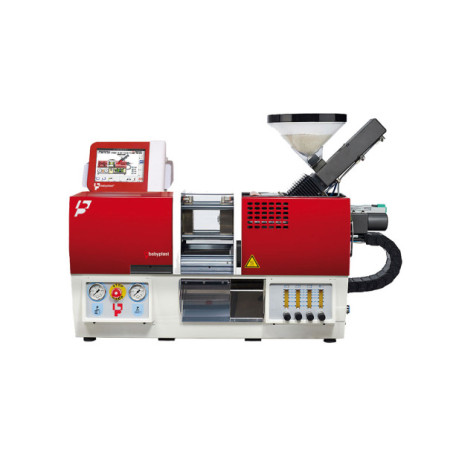
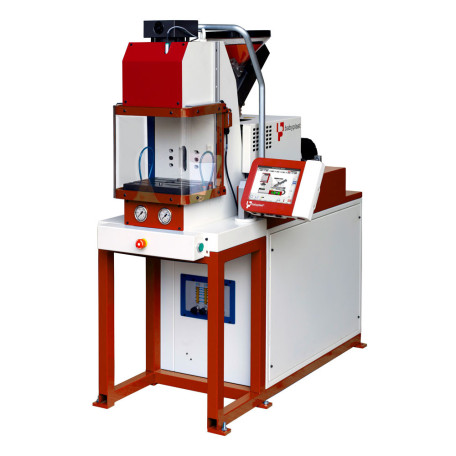
Babyplast is designed specifically for micro and small precision injection moulding.
For suitable applications, its compact moulding concept can allow manufacturers to use compact mould inserts or dies instead of constructing a conventional full-size mould base.
This can help reduce:
• Mould-base material
• Tool steel consumption
• Machining and material waste
• Overall mould dimensions and weight
• Assembly and handling requirements
• Lifting equipment requirements
• Storage space
• Prototype and development tooling investment
The objective is not simply to make the mould smaller.
It is to match the tooling system more closely to the actual size and production requirement of the component.
Especially Valuable for R&D and Product Development
Compact tooling can be particularly useful during:
• R&D
• Prototyping
• Product development
• Material evaluation
• Process development
• Pilot production
At this stage, product design, material selection, moulding feasibility and process parameters may still be under evaluation.
Building a large conventional mould too early can increase the financial impact if design changes are required later.
For suitable projects, compact tooling can help reduce the initial investment needed to validate the component before moving into higher-volume production.
What If Order Quantity Is Still Uncertain?
Many moulders already have larger injection moulding machines and may prefer to use existing equipment for a new small-part project, especially when future order volume is unclear.
This may appear to avoid investing in another machine.
However, machine investment is only one part of the total cost.
Using a much larger machine can also influence:
• Mould size
• Steel consumption
• Machining time
• Runner design
• Handling requirements
• Storage space
• Energy use
• Cost per good part
For suitable micro and small precision components, a right-sized moulding system may provide a more economical overall solution when machine, mould, material and production costs are considered together.
Smaller Mould, Lower Initial Risk
For new product development, the first objective is often not maximum production volume.
The first objective is usually to prove that the component can be moulded consistently, the material performs as expected and the process is stable.
Compact tooling can therefore help support development without over-investing too early.
Once the product and demand are validated, production can then be scaled accordingly.
The Principle Is Simple
A small precision component should not automatically require a large and expensive moulding system.
By matching the mould and machine more closely to the actual component requirement, manufacturers may be able to reduce steel consumption, machining, handling and overall tooling investment.
Smaller part. Compact mould. Smarter tooling investment.
Formative Tech Support
Formative Tech is the exclusive Babyplast distributor for Southeast Asia.
We support customers with Babyplast machine supply, application evaluation, moulding feasibility, process development, installation, commissioning, training and technical support.
We also provide precision mould fabrication, prototyping, sample moulding, small-batch production and scalable production support.
If you are developing a micro or small precision component and want to review mould investment, machine size or production strategy, contact Formative Tech to evaluate whether a Babyplast compact moulding solution may be suitable.
Learn more at www.ft.sg.