WHY BABYPLAST? Part 4: Minimise Runner Waste in Micro Injection Moulding
As polymer costs continue to rise, manufacturers are under increasing pressure to improve material efficiency and reduce unnecessary waste.
For micro and small precision components, the runner can sometimes weigh considerably more than the finished part itself.
This means runner waste should not be treated simply as an unavoidable by-product of injection moulding. It can have a direct impact on material cost, development cost, production efficiency and cost per good part.
The issue matters during both prototyping and R&D, as well as in high-volume production.
The Hidden Cost of Runner Waste
Runner waste affects more than resin consumption.
It may also create additional requirements for:
• Runner separation and handling
• Grinding and regrind storage
• Material traceability
• Quality control and validation
• Labour and secondary handling
• Waste disposal
• Production complexity
For high-value engineering polymers, medical-grade materials and specialised compounds, these additional losses can become expensive.
For some medical or regulated applications, regrind may also be restricted or not permitted depending on the material specification, product requirements and validation process.
In these cases, reducing runner waste at the source becomes even more important.
Why Runner Waste Matters in R&D and Prototyping
Prototype moulds are often designed with only one cavity.
When a very small component is moulded on a substantially larger conventional injection moulding machine, the sprue and runner may represent a significant proportion of the total shot weight.
During R&D, material development and process trials, customers may also be working with:
• Expensive engineering polymers
• Medical-grade materials
• Special compounds
• Experimental formulations
• Limited quantities of development resin
• Frequent material or colour changes
In these situations, a larger runner, higher start-up consumption and additional purging can make each trial considerably more expensive.
For prototype work, improving runner efficiency means using more of the available resin to produce the actual component rather than the runner.
Why Runner Waste Matters in Mass Production
Runner waste is equally important in high-volume production.
Even a small amount of unnecessary runner material per cycle can accumulate into substantial cost across thousands or millions of shots.
For example, if only a few grams of extra runner material are produced in every cycle, the total material loss can become significant over a long production run.
This can increase:
• Total resin consumption
• Material cost per good part
• Regrind handling requirements
• Storage and traceability requirements
• Labour
• Waste disposal
• Overall production cost
This is why runner weight should be considered as part of the total shot cost — not simply treated as unavoidable waste.
Why Babyplast Can Help
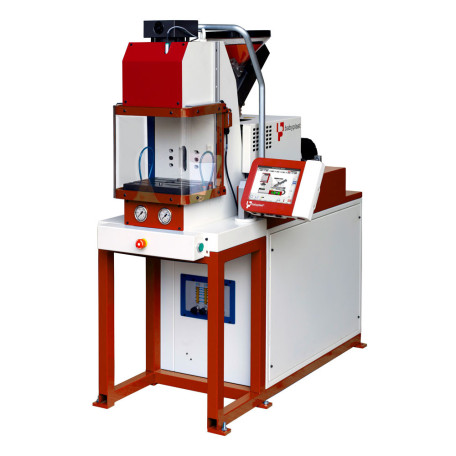
Babyplast is designed specifically for micro and small precision injection moulding.
Its compact injection and mould concept can support:
• Shorter material-flow paths
• Smaller runner systems where mould design allows
• Lower material consumption per trial
• Reduced purging and changeover loss
• Better use of limited or expensive development materials
• Improved material utilisation in both development and production
For suitable applications, a compact moulding concept can improve the relationship between the saleable part weight and the total shot weight.
The objective is simple:
Use more of the resin to make the part, and less of the resin to make the runner.
Direct Gating and Compact Runner Design
Direct gating is not unique to Babyplast.
However, Babyplast’s compact machine and mould concept can make it practical to position the injection point close to the cavity and reduce the runner path where the part and mould design allow.
This can help reduce:
• Sprue length
• Runner volume
• Material remaining outside the saleable part
• Cooling requirements associated with a larger runner
• Secondary runner handling
The correct gating concept depends on the component geometry, material, cavity layout, cosmetic requirements and mould design.
For this reason, gate and runner optimisation should ideally be considered during the DFM and mould-design stage.
Material Utilisation Matters More for Small Parts
For very small products, the runner can weigh considerably more than the finished part itself.
This means that even a relatively small improvement in runner design can significantly improve material utilisation.
A useful way to evaluate this is to compare:
Saleable part weight ÷ Total shot weight
The closer the total shot weight is to the actual weight of the finished parts, the better the material utilisation.
For micro and small precision components, this ratio can have a major impact on manufacturing economics.
Particularly Important for High-Value Materials
Runner reduction becomes even more valuable when processing materials such as:
• PEEK
• PEI
• PPS
• Medical-grade polymers
• High-temperature engineering polymers
• Special compounds
• Precisely coloured materials
• Development and trial materials
When every gram of material has significant value, material that becomes runner rather than finished product directly affects cost.
For R&D, this affects the cost of each trial.
For production, this affects the cost of every acceptable part.
Reduce Before Recycle
Recycling runner material can help reduce disposal.
But the better approach is often to reduce the amount of waste created in the first place.
A practical hierarchy is:
Reduce → Reuse → Recycle
For suitable micro and small precision components, reducing runner volume at the mould-design stage can help lower:
• Resin consumption
• Regrind requirements
• Labour
• Handling
• Storage
• Validation
• Waste disposal
The goal should not only be to recycle runner waste more efficiently.
It should be to choose Babyplast and design the moulding system around the actual part requirement, so that less material waste is created from the beginning.
Complete Micro and Precision Moulding Support
Formative Tech is the exclusive Babyplast distributor for Southeast Asia, supporting customers with:
• Babyplast machine supply
• Application and feasibility evaluation
• Machine selection
• Process development
• Installation and commissioning
• Training
• Technical and after-sales support
Beyond Babyplast machine supply, Formative Tech also supports customers worldwide with:
• DFM and moulding feasibility
• Precision mould fabrication
• Gate and runner optimisation
• Prototyping and sample moulding
• Process development
• Small-batch production
• Pilot production
• Scalable production and mass manufacturing support
From early-stage development to production scale-up, our objective is to provide a practical end-to-end micro and precision injection moulding solution.
Can Your Runner Be Reduced?
If your finished component weighs only a fraction of a gram but the runner weighs several times more than the part, it may be worth reviewing the moulding concept.
Formative Tech can evaluate the component, material, shot size, gate position, mould layout and production requirements to determine whether a smaller runner or more compact moulding approach may be suitable.
Learn more at www.ft.sg or contact Formative Tech to discuss your next micro or small precision moulding project.