WHY BABYPLAST? Part 3: Use Energy More Efficiently in Micro Injection Moulding
As energy costs continue to rise, manufacturers are under increasing pressure to improve production efficiency and reduce unnecessary power consumption.
For micro and small precision components, energy efficiency is not only about motors, heaters or machine settings. It also starts with selecting equipment that is appropriately sized for the actual production requirement.
Using a substantially larger injection moulding machine than the application requires may mean consuming energy to operate capacity that is not actually needed.
The Hidden Energy Cost of an Oversized Injection Moulding Machine
When a very small precision component is produced on a much larger injection moulding machine, energy may be required to operate:
• A larger clamping system
• Larger platens and moving components
• A larger injection unit
• A larger mould temperature-control system
• Additional cooling equipment
• Clamping and injection capacity that the component does not require
This does not mean that a smaller machine is always the better solution.
The correct machine still depends on the component, material, mould design, process requirements and production volume.
However, for suitable micro and small-part applications, selecting a right-sized machine can help improve the relationship between energy consumption and manufacturing output.
Why Babyplast Is Different
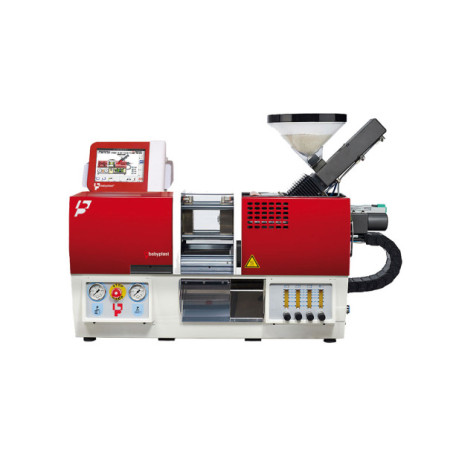
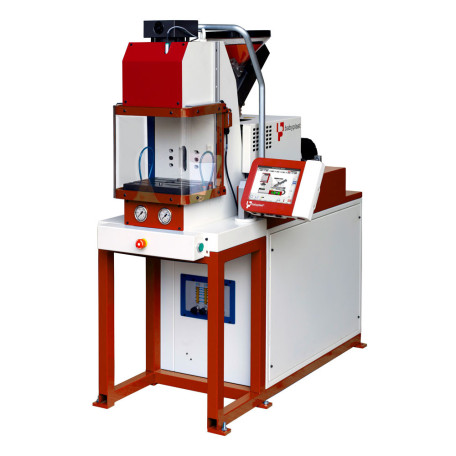
Babyplast is purpose-built for micro and small precision injection moulding.
The Babyplast 10T provides a compact production platform for applications that do not require the capacity of a substantially larger conventional injection moulding machine.
With approximately 3 kW of installed power, Babyplast offers a right-sized alternative for suitable small precision components.
The objective is not simply to operate a smaller machine.
It is to match the machine more closely to the actual requirements of the component being produced.
Energy Efficiency Is More Than Machine Power
A machine's installed power is only one part of the energy-efficiency equation.
The complete manufacturing process should also consider:
• Actual cycle time
• Mould heating and cooling
• Material drying
• Chillers and temperature-control equipment
• Robots and auxiliary equipment
• Reject rate
• Production output
• Machine utilisation
• Number of acceptable parts produced
A machine may have relatively low hourly electricity consumption, but if the process produces excessive rejects or requires unnecessarily long cycle times, the actual energy cost per acceptable component may still be high.
For this reason, the more meaningful question is not simply:
“How much electricity does the machine consume per hour?”
A better question is:
“How much energy is required to produce each acceptable component?”
Why Right-Sized Production Matters
For micro and small precision parts, right-sized production can help create a better balance between:
Energy consumption + machine utilisation + production output + cost per good part
An oversized machine may provide clamping force, injection capacity and production capability that the project does not fully use.
That unused capacity may still contribute to:
• Energy consumption
• Factory space
• Auxiliary-equipment requirements
• Mould size
• Cooling requirements
• Overall manufacturing cost
Selecting a machine that more closely matches the application can therefore contribute to both operational efficiency and production economics.
Energy Efficiency and Sustainable Manufacturing
Energy efficiency is also becoming increasingly important as manufacturers work toward more sustainable production.
Reducing unnecessary energy consumption can help support:
• Lower manufacturing costs
• Reduced energy use per component
• Better utilisation of equipment
• More efficient use of factory resources
• Lower environmental impact from production
Sustainability and manufacturing cost reduction do not always have to be separate objectives.
For the right application, improving the use of energy, materials, equipment and factory space can support both.
Particularly Suitable for Micro and Small Precision Components
Babyplast can be considered for applications such as:
• Medical micro components
• Electronics and connectors
• Sensors
• Precision mechanical components
• Insert moulding
• Overmoulding
• R&D and material testing
• Prototyping
• Pilot production
• Small-batch manufacturing
• High-mix production
• Scalable precision production
For these applications, the production requirement may be significantly smaller than the capacity provided by a conventional large-tonnage injection moulding machine.
A right-sized production system can therefore provide a more appropriate manufacturing platform.
Consider the Cost per Good Part
When evaluating energy efficiency, manufacturers should consider the total production system rather than focusing only on machine tonnage or installed power.
Important factors include:
• Electricity consumption
• Cycle time
• Reject rate
• Material consumption
• Auxiliary equipment
• Mould heating and cooling
• Machine utilisation
• Production volume
• Number of acceptable components produced
Ultimately, the objective is to achieve the lowest practical and sustainable cost per good part.
For micro and small precision components, this may mean selecting a machine that is better matched to the actual application rather than automatically using available larger equipment.
Right-sized production is not simply about using a smaller machine — it is about using the appropriate amount of energy, equipment and capacity to manufacture the required component efficiently.
Complete Micro and Precision Moulding Support
Formative Tech is the exclusive Babyplast distributor for Southeast Asia, supporting customers with:
• Babyplast machine supply
• Application and feasibility evaluation
• Machine selection
• Process development
• Installation and commissioning
• Training
• Technical support
• After-sales service
Beyond Babyplast machine supply, Formative Tech also supports customers worldwide with:
• DFM and moulding feasibility
• Precision mould fabrication
• Prototyping and sample moulding
• Process development
• Small-batch production
• Pilot production
• Scalable production and mass manufacturing support
From early-stage development to production scale-up, our objective is to provide a practical end-to-end micro and precision injection moulding solution.
Is Your Injection Moulding Machine Right-Sized for Your Part?
If you are producing micro or small precision components, it may be worth reviewing whether your existing injection moulding equipment is larger than the application actually requires.
Formative Tech can help evaluate the component, shot size, mould concept and production requirements to determine whether Babyplast is suitable for your application.
Learn more at [www.ft.sg](http://www.ft.sg) or contact Formative Tech to discuss your next micro or small precision moulding project.