WHY BABYPLAST? Part 2: Reduce Resin Waste in Micro Injection Moulding
As thermoplastic resin costs continue to fluctuate, manufacturers are under increasing pressure to improve material efficiency and reduce unnecessary waste.
For micro and small precision components, the true material cost is not determined only by the weight of the finished part.
It can also include:
• Sprues and runners
• Start-up rejects
• Purging material
• Colour and material changeover waste
• Material remaining inside the injection unit
• Trial and process-setting material
• Rejected components
For a precision component weighing less than one gram, these losses can represent a significant proportion of the total resin consumed.
This becomes even more important when processing high-value materials such as PEEK, medical-grade polymers, engineering thermoplastics and specially compounded resins.
Why Babyplast Is Different
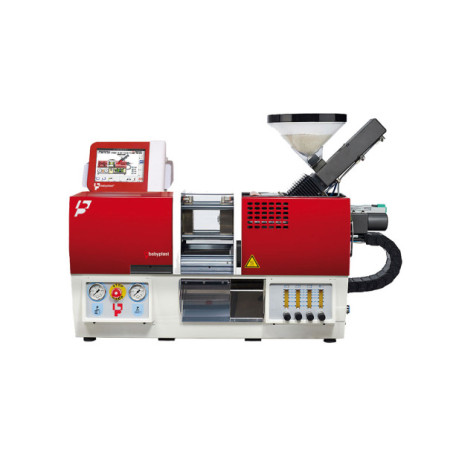
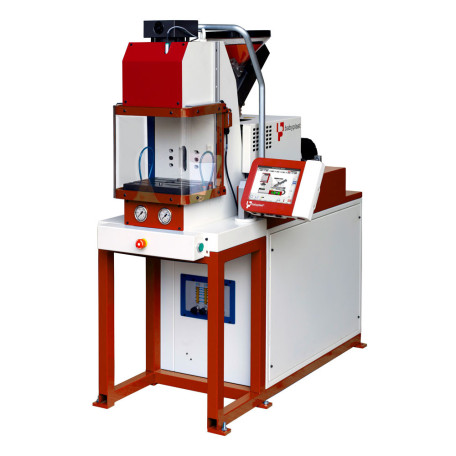
Babyplast is designed specifically for micro and small precision injection moulding.
Unlike a conventional screw-and-barrel system, Babyplast uses a compact plastification and injection concept with a short material path and small selectable injection volumes.
The Babyplast system uses a plastification piston to move resin through a heated chamber, where the material is melted mainly through controlled heat conduction rather than aggressive shear.
The prepared molten material is then transferred to the injection chamber.
During injection, a separate injection plunger and injection piston advance and push the prepared resin through the nozzle into the mould.
This compact concept can help reduce unnecessary material consumption and improve material control for small precision parts.
Reduced Melt Residence
A smaller material volume inside the injection system helps reduce the amount of resin remaining at processing temperature.
This can be especially beneficial when processing temperature-sensitive or high-performance polymers.
Lower Purging and Changeover Loss
When changing materials or colours, a compact injection system generally requires less material to clear the previous resin compared with a substantially larger injection unit.
For R&D, prototyping, pilot production and frequent product changeovers, this can help reduce unnecessary material loss.
Non-Aggressive Plastification
Babyplast melts the material mainly through controlled heat conduction rather than relying heavily on mechanical shear.
This can be advantageous for certain shear-sensitive or high-performance materials.
Small, Selectable Injection Volumes
Babyplast uses interchangeable injection chamber and piston sets.
This allows the injection volume to be selected more closely according to the actual shot requirement of the component.
Instead of using an oversized injection unit for a very small part, manufacturers can select a more appropriate injection configuration.
This can help improve material efficiency and reduce resin remaining inside the injection system.
Why Right-Sized Injection Volume Matters
For a precision component weighing only a fraction of a gram, an oversized injection unit may contain substantially more material than the actual shot requirement.
This can increase:
• Material residence time
• Purging requirements
• Changeover waste
• Risk of material degradation
• Start-up material consumption
For expensive engineering polymers, these losses can have a direct impact on production cost.
A right-sized injection system therefore focuses not only on producing the component accurately, but also on reducing the amount of material required around the production process.
Reduce Sprue and Runner Waste
Material efficiency also depends on mould and runner design.
Babyplast's compact mould concept can support shorter flow paths and smaller runner systems for suitable applications.
For extremely small components, this is important because the runner can sometimes represent a significant proportion of the total shot weight.
Reducing runner material can also help lower the amount of material that must be:
• Separated
• Ground
• Stored
• Reprocessed
• Disposed of
For applications where regrind is restricted, such as certain medical, optical or high-performance polymer applications, reducing runner waste becomes even more valuable.
Particularly Valuable for High-Cost Materials
Material efficiency becomes increasingly important when working with expensive or specialised materials such as:
• PEEK
• PEI
• PPS
• Medical-grade polymers
• Engineering thermoplastics
• High-temperature polymers
• Specially compounded materials
• Special colours and development materials
When resin costs are high, reducing purging, trial material, runner waste and unnecessary material residence can contribute directly to improving production cost.
Suitable for R&D, Prototyping and Production
The benefits of material efficiency are not limited to mass production.
They can also be valuable for:
• R&D
• Material testing
• Product development
• Prototyping
• Sample moulding
• Pilot production
• High-mix, low-volume manufacturing
• Small-batch production
• Precision mass production
During early-stage development, only a limited quantity of specialised resin may be available.
A compact injection system can therefore be especially useful when every gram of material matters.
Material That Does Not Become a Good Part Is a Cost
The true cost of injection moulding should not be evaluated only by machine price or finished-part weight.
Manufacturers should also consider:
• Material efficiency
• Runner and sprue weight
• Purging consumption
• Start-up waste
• Reject rate
• Changeover frequency
• Energy consumption
• Mould investment
• Production volume
For micro and small precision components, reducing unnecessary material around the part can contribute significantly to overall manufacturing efficiency.
The objective is not only to mould a small part — it is to minimise the material consumed around that part.
Complete Micro and Precision Moulding Support
Formative Tech is the exclusive Babyplast distributor for Southeast Asia, supporting customers with:
• Babyplast machine supply
• Application evaluation
• Process development
• Installation and commissioning
• Training
• Technical and after-sales support
Beyond Babyplast machine supply, Formative Tech also supports customers worldwide with:
• DFM and moulding feasibility
• Precision mould fabrication
• Prototyping and sample moulding
• Process development
• Small-batch production
• Pilot production
• Scalable mass production
From early-stage development to production scale-up, our objective is to provide a practical end-to-end micro and precision injection moulding solution.
Looking for a More Material-Efficient Moulding Solution?
If you are developing a micro or small precision component and would like to evaluate whether Babyplast is suitable for your application, contact Formative Tech.
We can support you from feasibility and tooling through prototyping, process development and scalable production.