WHY BABYPLAST? Part 7: Lower Cost per Good Part
The lowest machine-hour rate does not always produce the lowest-cost component.
For manufacturers producing micro and small precision plastic components, a more meaningful question is:
What is the total cost of producing each acceptable part?
As raw material prices, energy costs and other manufacturing expenses continue to put pressure on profitability, improving production efficiency has become increasingly important.
For micro injection molding applications, selecting a right-sized injection molding machine can help manufacturers control operating costs, minimise material waste and improve overall manufacturing efficiency.
Understanding the True Cost per Good Part
The cost of manufacturing a plastic component involves much more than the machine purchase price or hourly operating rate.
The total production cost may include:
- Raw material consumption, including sprues and runners
- Material used during start-up, purging and changeovers
- Energy consumption and auxiliary equipment
- Mould investment and maintenance
- Machine depreciation and utilisation
- Factory floor space
- Labour and material handling
- Cycle time and production output
- Rejects, rework and quality inspection
A useful way to evaluate manufacturing efficiency is:
Cost per Good Part = Total Production Cost ÷ Number of Acceptable Parts Produced
A machine with a lower hourly operating rate does not necessarily deliver the lowest cost per acceptable component if material waste, reject rates or other operating expenses are higher.
For manufacturers producing small precision components, evaluating the complete production process is therefore more meaningful than comparing machine-hour rates alone.
The Hidden Costs of Oversized Injection Molding Machines
Conventional injection molding machines are designed to process a wide range of component sizes and production volumes.
However, when a very small component is produced on a machine with substantially greater clamping force and injection capacity than required, unnecessary operating costs may arise.
These can include:
- Higher energy requirements associated with larger machine systems
- Increased material consumption during purging and changeovers
- Larger moulds and associated tooling investment
- Greater factory floor space requirements
- Higher auxiliary equipment demands
- Injection unit capacity that is not optimised for very small shot volumes
For micro and small precision components, selecting equipment appropriately matched to the application can help reduce unnecessary manufacturing overhead.
The objective is not simply to use a smaller machine, but to select the most suitable machine for the component, material and production requirements.
Material Residence Time and Its Effect on Quality
Material residence time is another important consideration when processing very small components.
When a small shot is processed in a much larger injection unit, the polymer may remain at processing temperature longer than desirable.
For certain heat-sensitive polymers, excessive residence time can increase the risk of:
- Material degradation
- Discolouration
- Changes in material properties
- Processing instability
- Increased reject rates
These risks can be particularly important when processing medical-grade polymers, engineering thermoplastics and high-performance materials.
The Babyplast Injection System Advantage
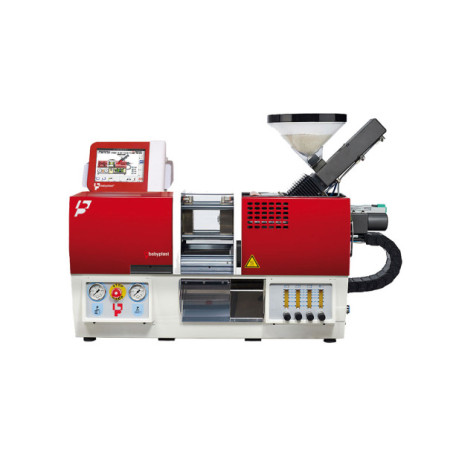
Babyplast micro injection molding machines feature a compact injection system designed specifically for small and micro shot volumes.
The system offers five interchangeable injection chamber and piston sets for each applicable machine model, allowing manufacturers to select an injection volume appropriate to the component and material requirements.
Unlike conventional screw-and-barrel injection systems, the Babyplast injection system uses a separate plasticising and injection process.
Material is plasticised and melted primarily through heat conduction in a heated chamber before being injected into the mould by a separate injection piston.
This non-aggressive melting process, together with the compact material volume, can offer advantages for suitable micro molding applications where material residence time, processing consistency and material utilisation are important.
Why Reject Costs Are Higher in 2K and 3K Molding
In multi-component injection molding, the financial impact of a rejected component can be greater because material and processing value are added progressively.
In 2K Molding
If a component is rejected during the second molding stage, the manufacturer may lose:
- Material used in the first molding stage
- Material used in the second molding stage
- Processing time and energy consumed during both stages
- Associated handling, inspection and quality-control costs
In 3K Molding
A rejection during the third molding stage can result in the loss of accumulated material, machine time and processing value from all three stages.
For components manufactured using high-value engineering polymers, specialised elastomers or medical-grade materials, these accumulated losses can become significant.
Rejects also affect more than immediate production costs.
Repeated quality problems may reduce production capacity, delay deliveries, affect customer confidence and potentially impact future business opportunities.
Process stability and consistent production of acceptable components are therefore essential when evaluating the true cost per good part.
How Babyplast Supports Cost-Efficient Micro Injection Molding
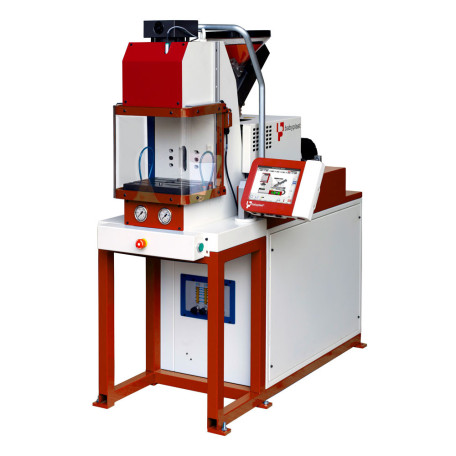
Babyplast micro injection molding machines are designed for micro and small precision plastic components.
Depending on the application, their compact construction and specialised injection system can offer several manufacturing advantages.
1. Right-Sized Production
Babyplast offers compact 6-ton and 10-ton injection molding machine solutions for applications requiring relatively low clamping force and small injection volumes.
For multi-component applications, the Babyplast UAI (Autonomous Injection Unit) can be integrated with suitable conventional injection molding machines to add an additional injection capability for 2K or multi-component molding.
This allows manufacturers to explore new multi-component applications without necessarily investing in a completely new dedicated multi-component injection molding machine.
Integration feasibility depends on the existing machine, mould configuration, control interface and application requirements.
2. Reduced Material Waste
Babyplast machines are specifically designed for small and micro shot volumes.
Their compact injection system and interchangeable injection chamber and piston sets allow manufacturers to better match the injection volume to the component being produced.
This can help reduce unnecessary resin consumption during:
- Start-up and process adjustment
- Purging and material changeovers
- Production of small precision components
These advantages can be particularly valuable when processing expensive engineering polymers, medical-grade materials and high-performance thermoplastics.
3. Efficient Energy Use
Babyplast machines have relatively low installed power requirements compared with many larger conventional injection molding systems.
However, energy efficiency should not be evaluated solely on installed machine power.
Manufacturers should consider the complete production process, including cycle time, mould heating and cooling, material drying, auxiliary equipment, reject rates and acceptable production output.
A useful performance indicator is the number of acceptable components produced per kilowatt-hour of electricity consumed.
4. Reduced Runner Waste
For very small components, the weight of the sprue and runner system can sometimes exceed the weight of the finished component.
This can result in unnecessary resin consumption and additional costs for material handling, separation, regrinding or disposal.
Compact mould layouts and appropriately designed runner and gating systems can help reduce runner waste.
The savings can be particularly meaningful when processing expensive polymers or materials for which regrinding and reuse are restricted.
5. Optimised Mould Investment
Micro and small precision components may be produced using compact mould designs suited to the Babyplast platform.
Depending on mould complexity, cavity configuration and application requirements, smaller mould dimensions can help reduce tooling material requirements and associated manufacturing costs.
For prototyping, R&D and low-volume production, an appropriately designed compact mould may also offer a cost-effective approach to product development and process validation.
6. Compact Factory Footprint
The compact Babyplast machine footprint allows manufacturers to make more efficient use of available production space.
This can be advantageous for facilities where floor space is limited or costly, including R&D laboratories, precision manufacturing facilities and selected cleanroom production environments.
Factory space efficiency should be assessed together with the requirements for operators, mould handling, auxiliary equipment and maintenance access.
7. Lower Cost per Good Part
By combining:
- Right-sized machine capacity
- Controlled material consumption
- Reduced runner and purging waste
- Relatively low installed power requirements
- Compact mould and machine dimensions
- Stable and repeatable processing
manufacturers may achieve a more competitive cost per acceptable component.
The objective is not simply to reduce individual operating expenses, but to improve the overall efficiency of producing consistent, acceptable parts.
Evaluate the Complete Manufacturing Process
Machine selection should not be based solely on purchase price, clamping force or machine-hour rate.
Manufacturers should evaluate the complete production process, including:
- Component dimensions, weight and shot volume
- Material type and processing requirements
- Mould design and cavity configuration
- Runner and gating system
- Cycle time and annual production volume
- Energy consumption and auxiliary equipment requirements
- Expected reject rate and quality requirements
- Maintenance and operating costs
A right-sized micro injection molding solution is not necessarily the best choice for every component.
However, for suitable micro and small precision applications, it can provide an effective alternative to using substantially larger injection molding equipment.
Conclusion: Right-Sized Machine. Right-Sized Process. Lower Cost per Good Part.
Throughout our seven-part WHY BABYPLAST? series, we have explored how selecting appropriately sized injection molding equipment can influence manufacturing efficiency.
From reducing resin and runner waste to improving energy utilisation, controlling mould investment and optimising factory space, each factor contributes to the overall cost of producing an acceptable component.
Ultimately, manufacturing efficiency should not be measured simply by the number of components produced.
It should be measured by how efficiently manufacturers produce consistent, acceptable components at a competitive total cost.
Right-sized machine. Right-sized process. Lower cost per good part.
Explore Babyplast Micro Injection Molding Solutions
Formative Tech Pte Ltd is the exclusive Southeast Asia distributor for Babyplast micro injection molding machines.
Beyond machine supply, we provide comprehensive micro and precision molding solutions, including:
- Babyplast micro injection molding machines
- Babyplast UAI injection units for 2K and multi-component molding
- Precision mould design and fabrication
- Product design review and Design for Manufacturing (DFM) consultation
- Prototyping, small-batch and scalable production
- Technical support, installation, training and preventive maintenance
Our solutions support manufacturers in the medical, electronics, automotive, precision engineering and R&D sectors.
Through our engineering expertise and affiliated manufacturing capabilities, we also support customers worldwide with precision and micro mould fabrication, prototyping and production services.
Contact Formative Tech to discuss your micro injection molding application and explore how a right-sized manufacturing solution may help improve your cost per good part.
Website: www.ft.sg
Precision Micro Molding Solutions
Exclusive Southeast Asia Distributor for Babyplast